
- CHEMICAL COCKTAILS
- Nitrogen Fertilizers
- Based on estimates, only around 50% of the global population could be sustained without reactive nitrogen fertilizer.
(reactive nitrogen = every form of nitrogen other than the molecular) - Atmospheric N → ammonia (Haber-Bosch process)
- Runs on fossil fuels and energy intensive (although there are electricity-driven technologies in the horizon, but this does not solve other problems related to usage)
- https://ourworldindata.org/how-many-people-does-synthetic-fertilizer-feed
- Based on estimates, only around 50% of the global population could be sustained without reactive nitrogen fertilizer.

- Glyphosate
- 1.2 dl is the estimated amount of glyphosate, that an adult living in the EU could have consumed between 2002 and 2025.
- Source: calculations based on EU legislations and statistics
(calculations to be inserted here)
- DDT
- 4.2% of measured EU-market food samples contain DDT, a pesticide that was banned in 1972 worldwide.
- Source: Residues of Banned Pesticides in EU food, PAN Europe, 2020

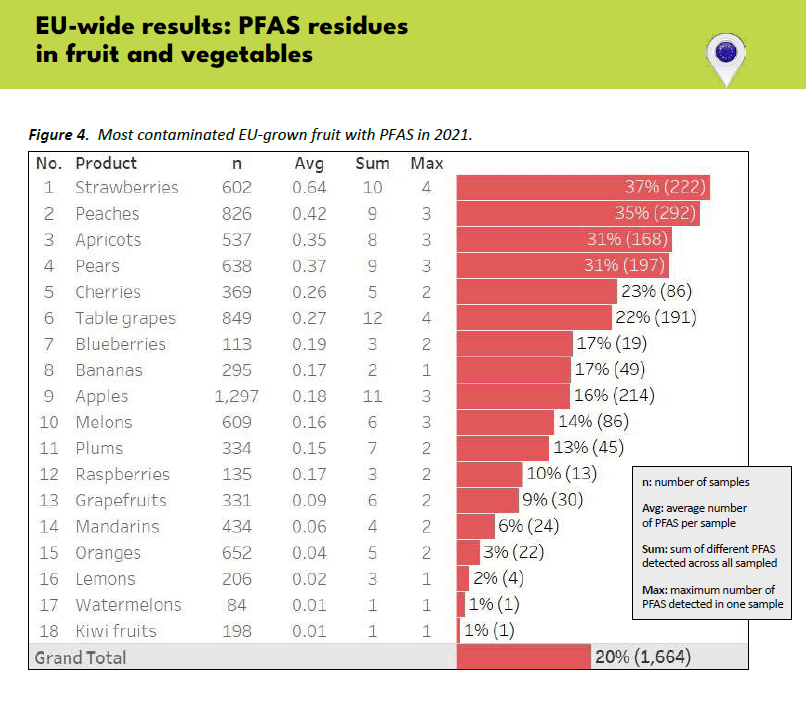
- PFAS
- 37% of EU-grown strawberries had forever chemical (PFAS) residues, thus being the no.1 fruit contaminated with PFAS.
- Source: Toxic Harvest, The rise of forever pesticides in fruit and vegetables in Europe, 2024
- Cocktail effect
- 26.4% of European fruit samples contain more than one type of pesticide, also known as a ‘pesticide cocktail’.
- Source: The 2023 European Union report on pesticide residues in food, 2025

 Hajnal Gyeviki