

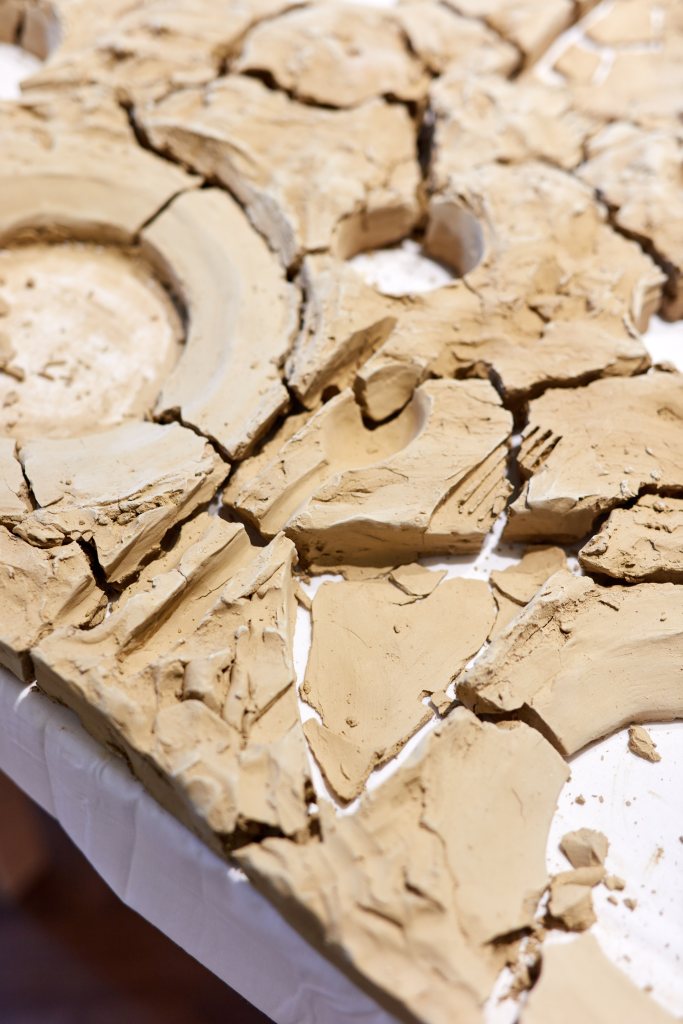
Food security has been an ever-present socio-environmental issue throughout the history of civilised humanity. Flourishing ancient cultures were reduced to dust by farming that gutted their fertile soils, and since the industrial revolution, mechanised farming methods have been destroying the Earth’s soil reserves at a faster rate than ever before.
It is a well-known fact that we have already lost much of our fertile soils. We have interfered with the slow rate of humus formation. Since degraded topsoil can only regenerate itself over centuries, our only option is to intervene in the degraded system we have created.
The Soil Degradation Dinner is a dystopian picture of the agricultural landscapes and dinner tables of the future – the possible future that awaits us if there is no change in our current dominant food production methods.
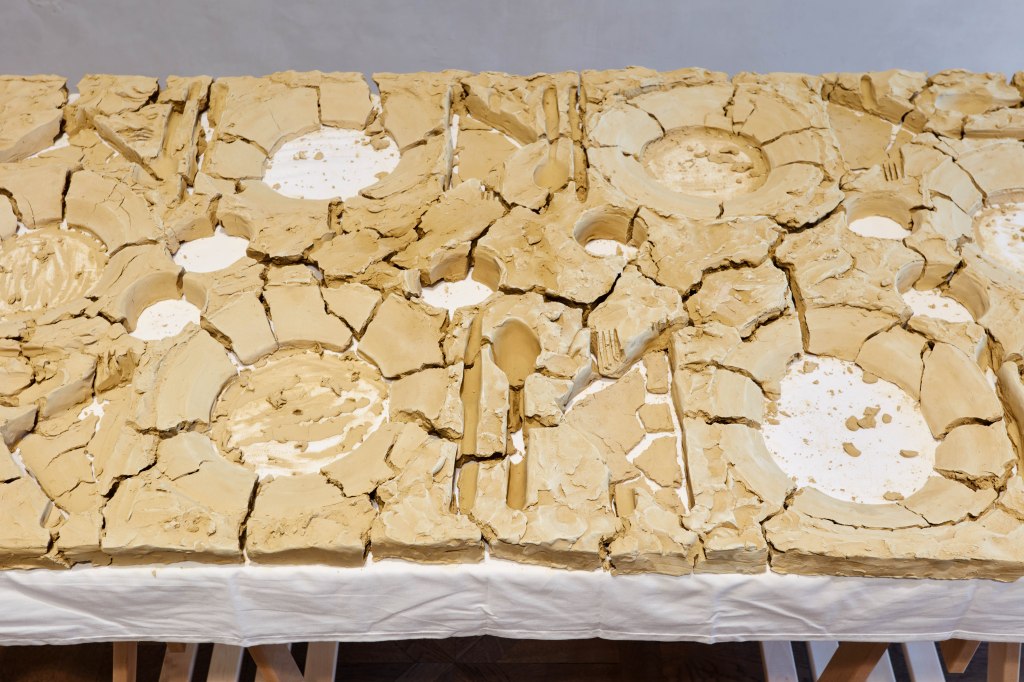
Az élelmezésbiztonság a civilizált emberiség történelmében egy folyton jelen lévő társadalmi-környezeti kérdés. Virágzó ókori kultúrák váltak porral egyenlővé a termékeny talajaikat kizsigerelő földművelés következtében, az ipari forradalom óta pedig a gépesített mezőgazdaság módszereivel pusztul minden korábbinál gyorsabb ütemben a Föld termőréteg-készlete.
Ismert tény hogy termékeny talajaink nagy részét már elveszítettük. Beleszóltunk a humuszképződés lassú rendjébe. Mivel a lepusztult termőtalaj magától évszázadok alatt tudna csak regenerálódni, egyetlen lehetőségünk az általunk degradált rendszerbe való beavatkozás.
A Talajpusztulás vacsora egy disztópikus kép a jövő mezőgazdasági tájairól és vacsoraasztalairól – arról a lehetséges jövőképről, ami akkor vár ránk ha nem történik változás a jelenleg uralkodó élelemtermelési módszereinkben.

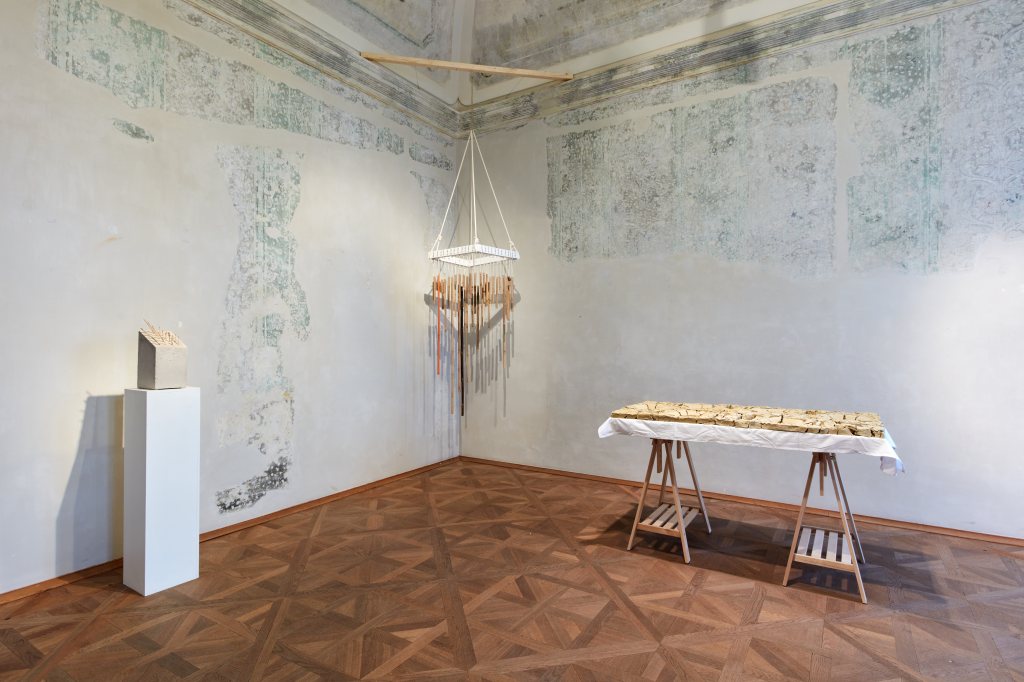
Dimensions: 70 x 51 x 11 cm
Raw clay, cotton tablecloth, wooden table
The exhibition was the finissage event of Balatorium project’s artistic researches. It was on view between 10/2023 and 01/2024 at Dubniczay Palace in Veszprém, and curated by Borbála Soós.
 Hajnal Gyeviki