
In the Wild_ining series I focused on the lack of modern human’s knowledge of wild plants. What value do hand-picked berries have in an age of ultra-processed food and instant consumption? Could we consider edible wild plants growing in the city as food if we knew about them? How does harvesting change our relationship to consumption?
A Wild_ining sorozatban a modern ember vadnövényekkel kapcsolatos tudásának eltűnésére fókuszáltam. Mekkora értéke van a saját kezünkkel szüretelt bogyóknak az ultrafeldolgozott ételek és az azonnal fogyasztás korában? Vajon tudnánk élelemként tekinteni a városban növő ehető vadnövényekre ha ismernénk őket? Hogyan változik a szüretelés révén a fogyasztáshoz való viszonyunk?
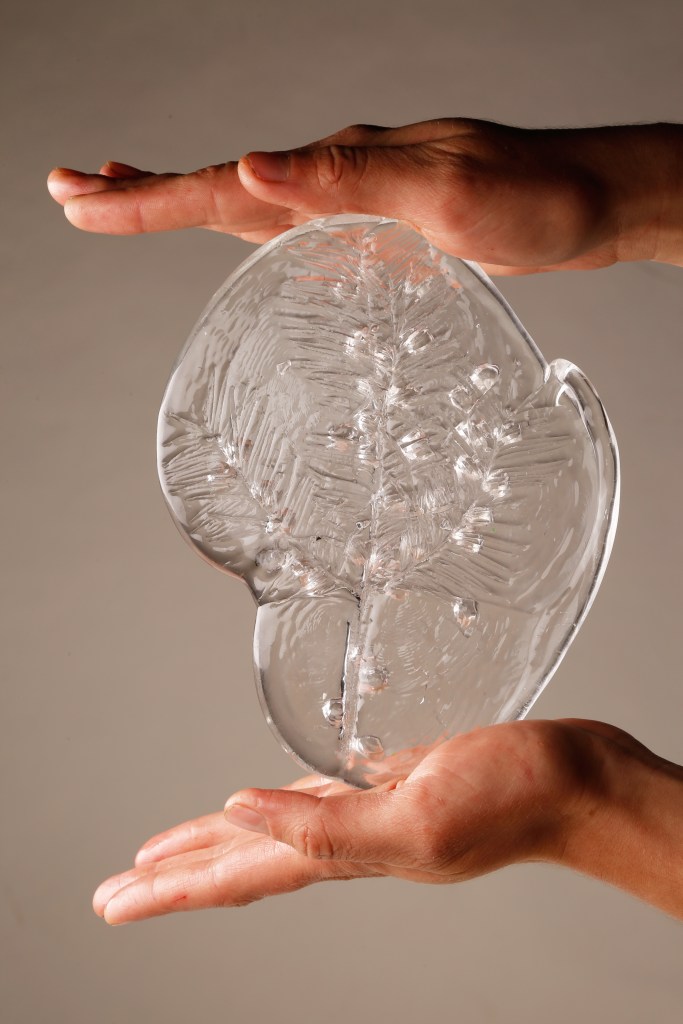
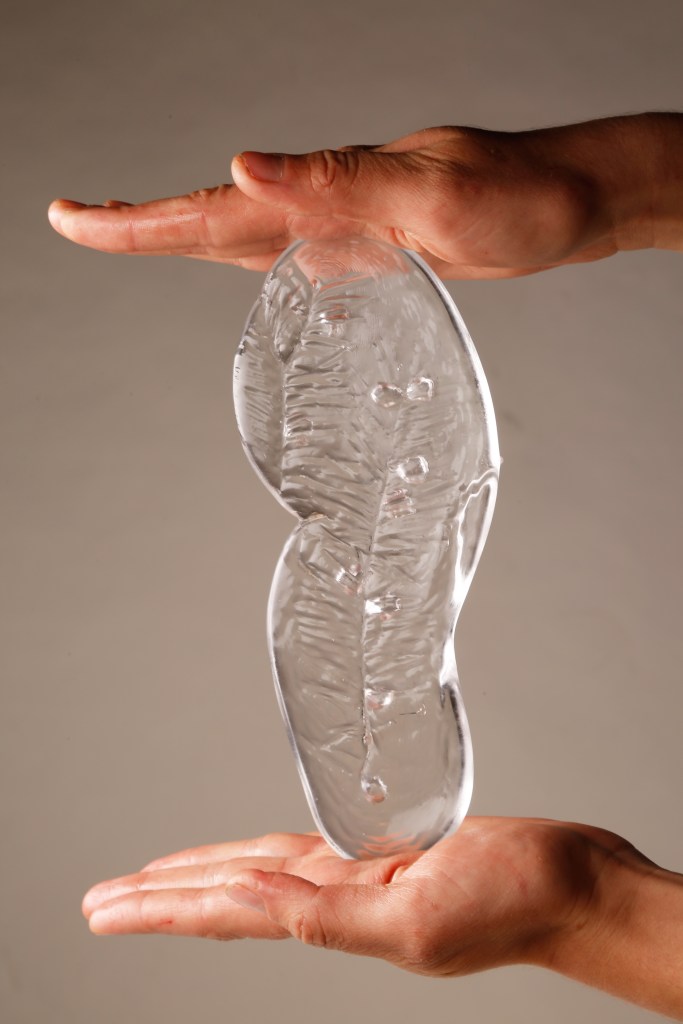


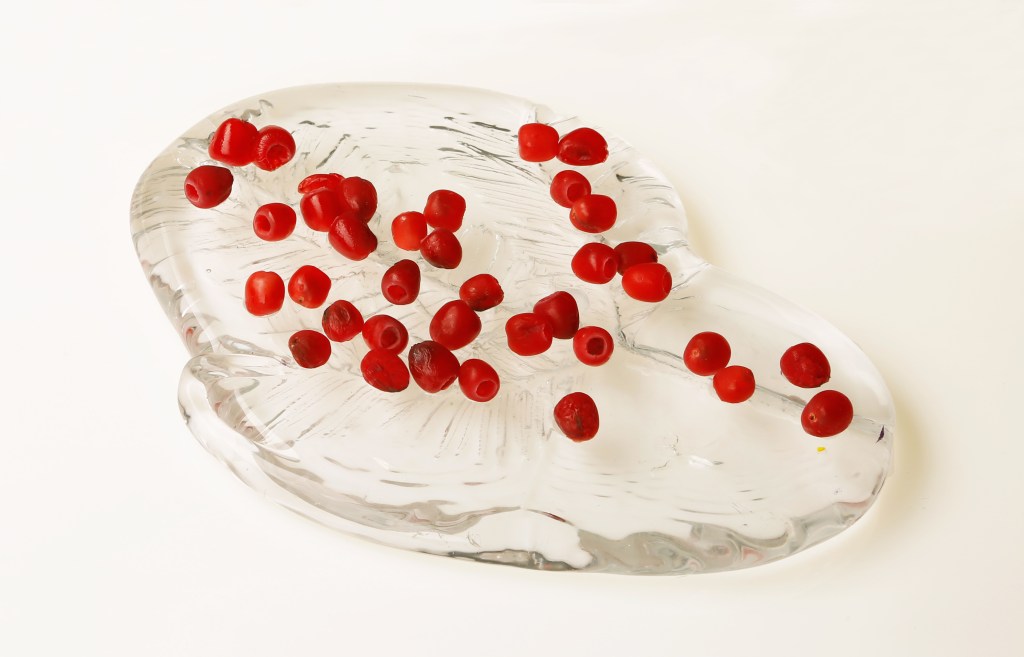
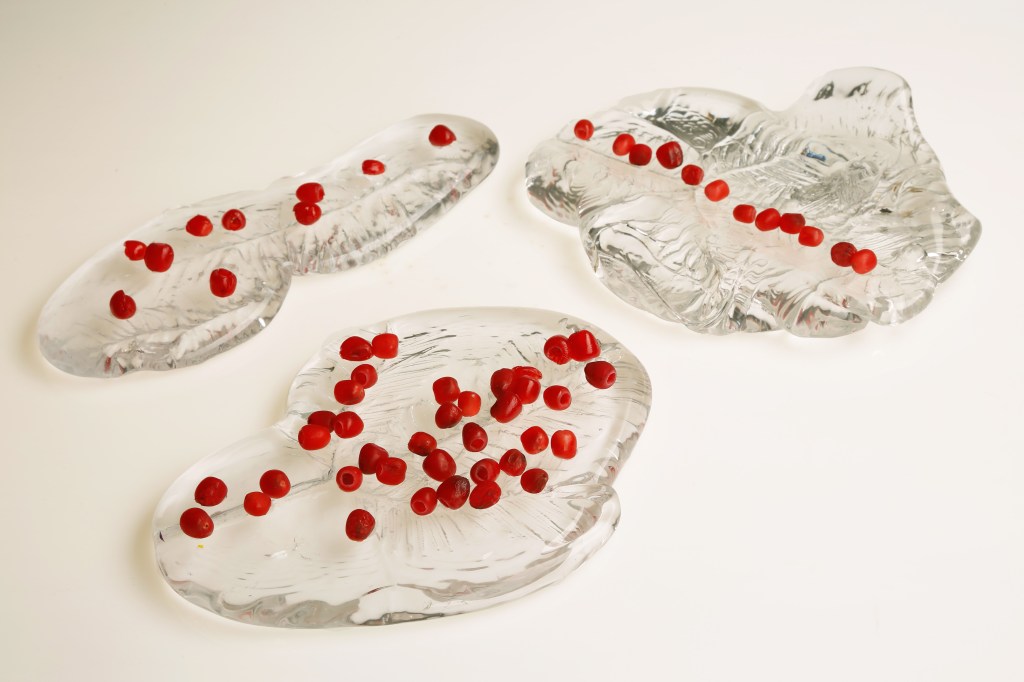
hutaüveg tálalók tiszafa-magköpeny csemegézéshez, frosted glass serving plates for yew-seed coat delicacies
cca. 3 × 20 × 15 cm each piece, a darabok mérete egyenként kb. 3 × 20 × 15 cm
Whether you are growing up in the city or the countryside you know for sure that the common yew’s (Taxus baccata) leaves and seeds are toxic. However, keeping a fair distance is completely unfounded in the case of the red seed coats of the plant. This stirking coloured part – contrary to every other part – is edible and delicious.
The conceptual object has only one real purpose: to make the consumption of educational yew seed coat
possible and festive at the same time.
IMPORTANT! The meal should be accompanied by an escort who ensures the maximum safety of the participants by removing the seeds in advance.
The seed coats should be placed into the grooves that had been sanded into the plate.
On the bottom of each object there are botanical imprints of yew trees. The gesture of increased distance and inaccessibility regarding to the branches makes a core part of the educative function – drawing attention to those parts of the plant that we really need to avoid.
Attól függetlenül hogy városban vagy vidéken nő fel az ember, minden bizonnyal tud róla, hogy a tiszafa levele és magjai mérgezőek. A tisztes távolság tartása azonban teljesen megalapozatlan a növény piros magköpenyével szemben. Ez a feltűnő színű termésburok ugyanis az összes többi részétől eltérően
ehető, ráadásul ízletes is.
A konceptuális tárgynak egyetlen igazi használati célja van: az edukációs tiszafamagköpeny-fogyasztás
lehetővé és egyben ünnepivé tétele.
FONTOS! Az étkezést egy megbízottnak kell kísérnie, aki a magok előzetes eltávolításával gondoskodik a résztvevők maximális biztonságáról.
A magköpenyek a tálalóba belecsiszolt vájatokba helyezendőek.
A tárgyak hátoldalán tiszafáról vett botanikai lenyomatok találhatók. A távolításnak és a hozzáférhetetlenség növelésének ezen gesztusa hordozzák az edukatív funkció lényegét – felhívják a figyelmet növénynek arra a részére, melyet valóban el kell kerülnünk.
 Hajnal Gyeviki